What Jazz Taught Kusturica About Telling Stories Without a Cigarette in the Frame

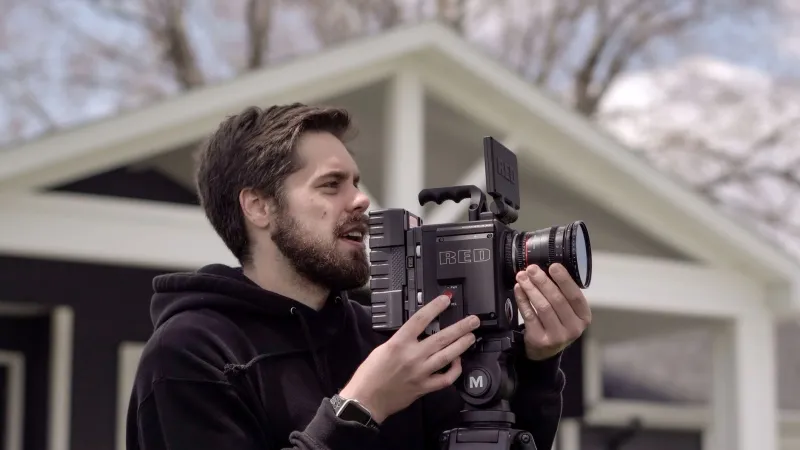
Photo by Photo by Kevin Loesch on Unsplash on Unsplash
There's a moment in almost every great jazz performance when the musician does something that surprises you: they stop. Not because they've run out of ideas, but because the silence is the idea. That deliberate restraint — the held breath between notes — is what separates a technically proficient player from a genuinely expressive one. It turns out, that same principle is at the beating heart of how Emir Kusturica approaches filmmaking, and it goes a long way toward explaining why you won't find a cigarette functioning as a narrative crutch anywhere in his work.
Kusturica has never been shy about his love of jazz. He fronts his own band, the No Smoking Orchestra — a name that should tell you something right there — and has talked extensively about how music shapes the emotional architecture of his films. But the connection runs deeper than soundtrack choices or on-set playlists. Jazz, at its core, is a philosophy of creative decision-making. And that philosophy maps almost perfectly onto what makes his cinema so distinct.
The Art of Knowing What to Leave Out
Ask any seasoned jazz musician what separates beginners from masters and they'll tell you the same thing: beginners fill every available space. They're afraid of silence, afraid the audience will lose interest if there's a gap. Experienced players know that the space between notes is where the emotional weight lives. Miles Davis didn't become Miles Davis by playing everything he knew on every track. He became Miles Davis by choosing — ruthlessly, brilliantly — what not to play.
Kusturica applies this same logic to the visual and narrative choices in his films. Lazy filmmakers reach for a cigarette the way a nervous musician reaches for a fill: it's filler, a way to avoid the harder work of building tension, revealing character, or conveying interiority through something more inventive. A character lighting up has been used so often in American cinema as shorthand for cool, conflicted, or contemplative that it's essentially lost all meaning. It's the cinematic equivalent of a stock chord progression — technically functional, emotionally inert.
By refusing to lean on tobacco imagery, Kusturica forces himself — and by extension his actors and writers — to find something better. The result is a body of work that crackles with a specific kind of inventive energy, the energy of artists who've deliberately closed off the easy exit.
Improvisation Doesn't Mean Undisciplined
One of the biggest misconceptions about jazz is that improvisation means making things up without a plan. In reality, jazz improvisation is built on deep structural knowledge and rigorous practice. A player who can improvise brilliantly has internalized the rules so thoroughly that they can bend them in real time without losing the thread. Freedom, in jazz, is earned through discipline.
Kusturica's filmmaking operates the same way. His films feel wild, chaotic, almost deliriously alive — the weddings that spiral into brawls, the funerals that become celebrations, the animals wandering through scenes with complete narrative authority. But that apparent chaos is meticulously constructed. The freedom on screen is the product of constraint behind the camera.
His anti-smoking stance is part of that discipline. It's not a marketing position or a health-campaign talking point grafted onto his work from the outside. It's an artistic conviction that grows from the same place as his jazz sensibility: the belief that restraint and intention produce richer results than reaching for whatever's convenient. When you take cigarettes off the table as a storytelling device, you're not limiting yourself — you're challenging yourself to improvise something better.
What American Indie Filmmakers Can Steal From This Playbook
Here in the States, indie filmmaking has a complicated relationship with tobacco imagery. On one hand, there's a growing awareness — both cultural and regulatory — around how smoking is depicted on screen. On the other hand, the cigarette still gets deployed with almost reflexive frequency in certain corners of the indie world, particularly in films trying to signal a kind of downtown, post-Jarmusch cool.
The Kusturica model offers a genuinely useful alternative framework, and it's one that American filmmakers could adopt without sacrificing an ounce of edge or authenticity. The question isn't "how do I make my character look interesting without a cigarette?" That framing is already too narrow. The real question — the jazz musician's question — is "what is the most expressive possible choice I can make in this moment?"
Sometimes that's a gesture. Sometimes it's a piece of music. Sometimes it's the way a character moves through a space or the specific object they pick up and put down. Kusturica's films are full of these moments — dense, layered, alive with behavioral specificity that a cigarette would actually flatten rather than deepen. Tobacco imagery creates a kind of visual shorthand that shuts down interpretation. The approaches Kusturica favors open it back up.
Clean Air as Creative Oxygen
There's something almost paradoxical about the phrase "No Smoking Orchestra." An orchestra implies structure, arrangement, collective discipline. Smoking implies the opposite — a solitary habit, a small rebellion, a moment outside the ensemble. Kusturica's band name collapses that paradox deliberately. You can have the energy, the wildness, the improvisational spirit — and you don't need tobacco to get there.
That's the message embedded in his filmmaking practice, and it's one that resonates beyond cinema. The idea that creativity requires some kind of self-destructive prop is one of the most persistent and damaging myths in American artistic culture. Jazz musicians lived it for decades — the association between addiction and genius cost the genre some of its greatest voices way too early. Kusturica, who came of age loving that music, seems to have absorbed a different lesson from it: what those artists created, they created despite their habits, not because of them.
The clean air in his films isn't just a health statement. It's an aesthetic one. It's the silence between the notes, the space where the real meaning lives.
Playing It Clean, Playing It Loud
If you want to understand what Kusturica's anti-smoking commitment actually looks like as a creative principle, don't think about what's absent from his films. Think about what's present instead — the sheer density of sensation, the musical energy, the physical comedy that tips into genuine grief, the way his characters express inner lives through action rather than atmosphere. That's not the work of someone who gave something up. That's the work of someone who traded a crutch for a full rhythm section.
For American indie filmmakers looking to level up, the invitation is open. Put down the cigarette prop. Pick up the harder instrument. Learn what you can do in the space you've cleared. That's the jazz approach, the Kusturica approach, and honestly — it's just the approach of anyone serious about their craft.